
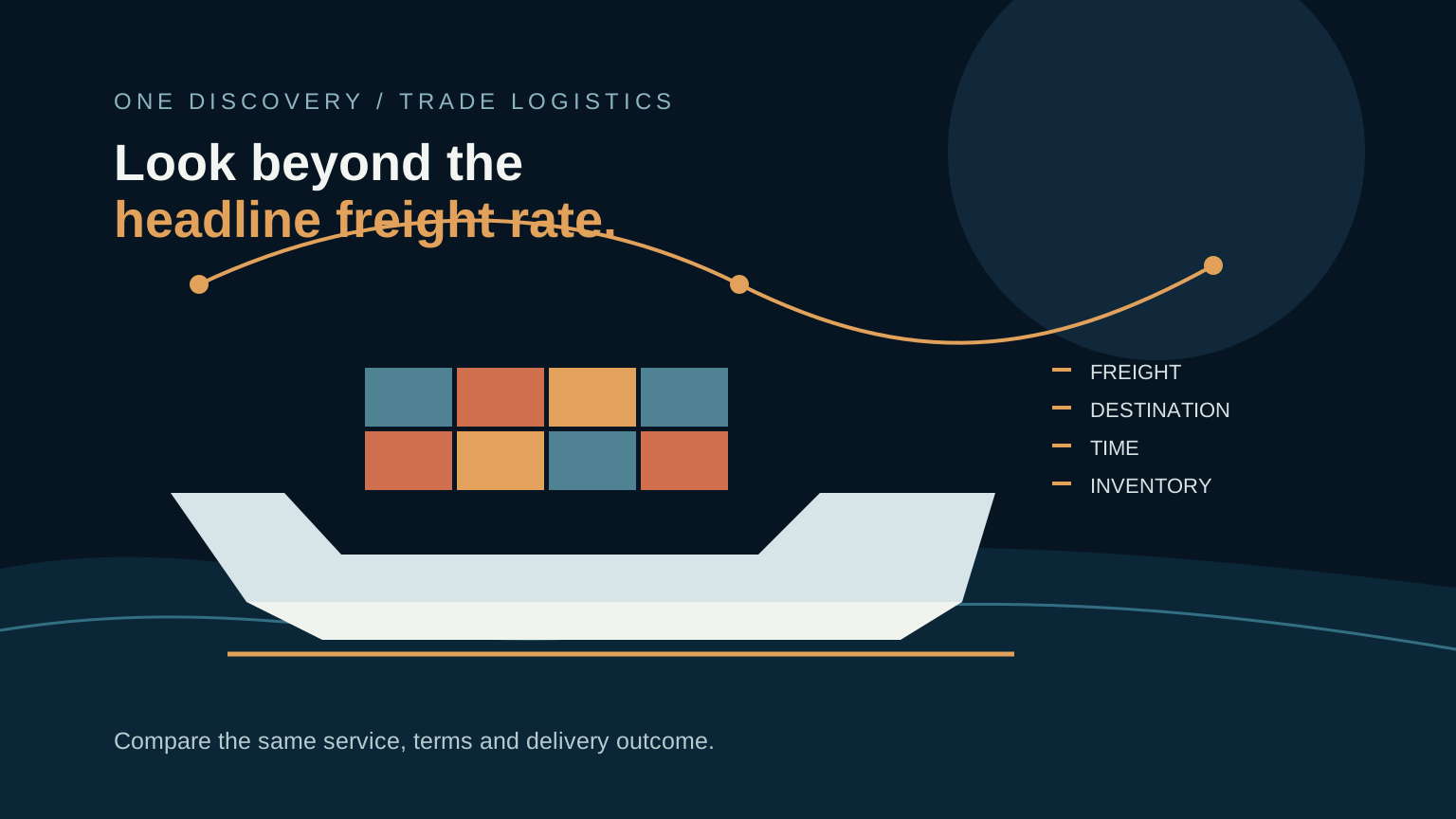
The lowest freight quote is only a useful benchmark when it covers the same service as the alternatives. If one offer excludes destination handling, assumes a longer transit time or leaves more costs and responsibilities with the buyer, the headline price can be misleading. A simple comparison sheet can help procurement teams see what is included, what remains uncertain and what the business will pay to receive the cargo.
UN Trade and Development’s Review of Maritime Transport 2025 describes how rerouting and volatile freight markets can affect voyage times and operating costs. That does not mean every shipment faces a disruption. It does mean that freight assumptions should be checked rather than treated as fixed facts.
Start by making the quotations comparable
Before comparing price, confirm that each supplier or forwarder is quoting for the same cargo specification, weight or volume, origin, destination, shipment window and service type. Check whether the offer is for a full container, less-than-container load, breakbulk or another arrangement. Even small differences in assumptions can make two prices look closer than they really are.
- Route and service: identify the named origin and destination, transshipment points, carrier or service, and whether the route is direct.
- Transit time: compare the stated port-to-port time and the full door-to-door estimate. Ask what is excluded from the estimate.
- Validity: confirm the quote expiry, space availability, sailing date and conditions that could trigger a rate change.
- Currency and units: align currency, chargeable weight, container size and any minimum charges before calculating totals.
Check the delivery term, not just the price
Incoterms® rules help clarify the respective responsibilities, costs and risks of buyers and sellers in a sale contract. The exact rule and named place matter. A quote described as FOB is not directly comparable with a quote described as CIF or DAP unless the buyer accounts for the different services and obligations.
Do not assume that a delivery term answers every operational question. Confirm in writing who books carriage, arranges insurance, handles export and import formalities, pays destination charges, and supplies the documents required for clearance. If the quotation uses a term without naming the place or port precisely, ask for clarification before approval.
Build a landed-cost comparison
Use a single worksheet and add costs that are applicable to the specific shipment. Avoid adding generic contingency charges without a reason, but do not leave out charges merely because they are absent from the headline rate.
- Freight and any fuel, peak-season or security-related surcharges quoted for the shipment.
- Origin and destination handling, documentation, terminal and delivery charges.
- Insurance, customs duties and taxes, using the correct local basis and product classification.
- Expected storage, demurrage or detention exposure, including free-time assumptions.
- Any additional inventory or financing cost caused by a longer delivery cycle.
For example, a lower port-to-port rate may be less attractive if it arrives later and requires extra stock to protect production. Treat this as a scenario to quantify, not an automatic reason to reject the cheaper service. Compare the costs using the same currency, date assumptions and delivery scope, and label estimates separately from confirmed charges.
Ask what happens when the plan changes
A quotation is not a guarantee that every operational assumption will hold. Ask how the provider communicates schedule changes, what options exist if a sailing is missed, and whether an alternative route or departure can be offered. Confirm who must approve extra charges and how the parties will document a change.
For critical cargo, it is also worth checking whether the proposed backup is real. An alternative carrier that uses the same congested port may not reduce the main exposure. A second supplier may depend on the same origin or documentation process. The fallback should be assessed on its own cost, lead time and feasibility.
A practical approval checklist
- Confirm cargo, route, delivery point, shipment window and service type match across quotes.
- Identify the Incoterms® rule and named place, then clarify responsibilities in writing.
- Separate included charges, excluded charges, estimates and conditions that could change the price.
- Compare the expected landed cost and realistic delivery time—not only the freight line.
- Record the key risk, the fallback option and the person who can approve a change.
The aim is not to choose the most expensive option or to build a complicated risk model for every shipment. It is to make sure the decision is based on a fair comparison. A low rate can be the right choice when the service fits the requirement and the assumptions are sound. When it does not, the apparent saving may disappear later in the process.
Sources
- UN Trade and Development (UNCTAD), Review of Maritime Transport 2025
- International Chamber of Commerce, Incoterms® rules
Market information only. Independently verify commercial, legal, tax and compliance requirements before acting.