
Commodity transactions can involve several intermediaries, multiple documents and tight delivery windows. A polished offer, a corporate website or a large claimed allocation is not proof that the seller controls the product or can perform the contract. A disciplined buyer checks each material claim through a separate, reliable channel before paying deposits, sharing sensitive documents or arranging a site visit.
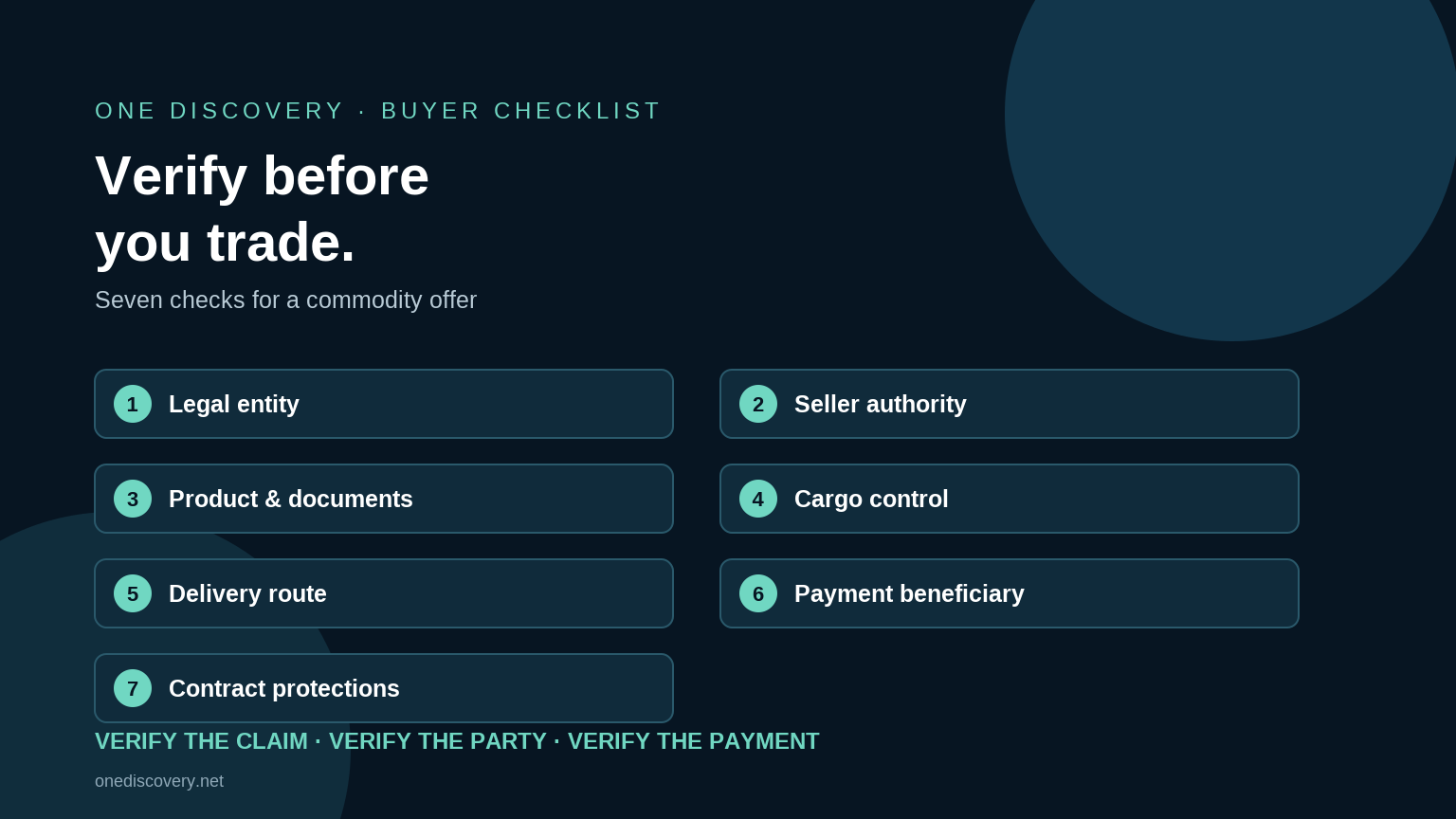
Seven checks before moving forward
- Confirm the legal entity. Check the registered company name, registration number, jurisdiction, address and directors through the relevant official registry. Make sure the contracting party—not merely a similarly named company—matches the records.
- Verify the person’s authority. Confirm that the contact is authorised to represent the seller and sign or negotiate for the named entity. Use contact details obtained independently, not only numbers or email addresses supplied in the offer.
- Match the product to the documents. Check grade, specification, quantity, origin, packaging, inspection standard and shipment window. Ask what each certificate proves, who issued it and whether it can be validated with the issuer.
- Test control of the cargo. Clarify whether the seller is the producer, title holder, mandate or broker, and request evidence appropriate to that role. A warehouse receipt, allocation letter or certificate should be verified with its issuer or custodian where possible; a document image alone does not establish current control.
- Validate the delivery route. Confirm loading point, destination, Incoterms rule and named place, inspection arrangements, freight responsibilities, insurance and realistic dates. Check that the proposed route and responsibilities align across the offer, contract and logistics plan.
- Independently confirm payment instructions. Ensure the beneficiary is the contracted legal entity and that any account change is verified through a known, independent contact. Treat requests for urgent payment to unrelated third parties, personal accounts or newly substituted beneficiaries as a stop-and-check signal.
- Make the contract match the evidence. Review quantity and tolerance, quality claims, inspection and rejection rights, delivery milestones, remedies, governing law, dispute resolution and conditions for releasing funds. Have qualified legal and trade-finance professionals review material or unfamiliar structures.
Use a staged decision, not a single “proof”
Organise the review into three stages: identity and authority first; product, title and logistics second; payment and contract controls last. If a key fact cannot be verified, pause the transaction and record exactly what is missing. Do not let a deadline, a claimed competing buyer or a request to keep the process confidential replace evidence.
For higher-value transactions, consider independent inspection, bank-to-bank confirmation or a reputable escrow or trade-finance structure where appropriate and legally available. These controls are not interchangeable, and none guarantees performance on its own. Choose them based on the commodity, jurisdictions, counterparties and contract—not on assurances from one party.
A practical go / pause / stop rule
- Go: material claims are independently verified, the contract reflects them and the payment route matches the parties.
- Pause: a document, authority, beneficiary or delivery detail remains unresolved and can reasonably be checked.
- Stop: counterparties refuse reasonable verification, documents conflict, payment is redirected without reliable confirmation, or pressure is used to bypass agreed controls.
The objective is not to make every transaction slow. It is to spend verification effort where it reduces the risk of paying the wrong party, buying unavailable goods or accepting terms that cannot be executed. In physical trade, a credible offer is one that survives independent checks from seller identity through final delivery.
Sources
- OECD — Due Diligence Guidance for Responsible Business Conduct
- U.S. Treasury — OFAC Sanctions List Search
- International Chamber of Commerce — Incoterms® 2020
- United Nations Security Council — Consolidated Sanctions List
This article is a general operational checklist, not legal, banking or investment advice. Verification requirements differ by commodity, jurisdiction and transaction structure. Buyers should consult relevant official company registries, issuing authorities, banks, inspection firms and qualified advisers for the specific transaction.
One Discovery · Commodity Procurement and Transaction Due Diligence · 21 October 2026