
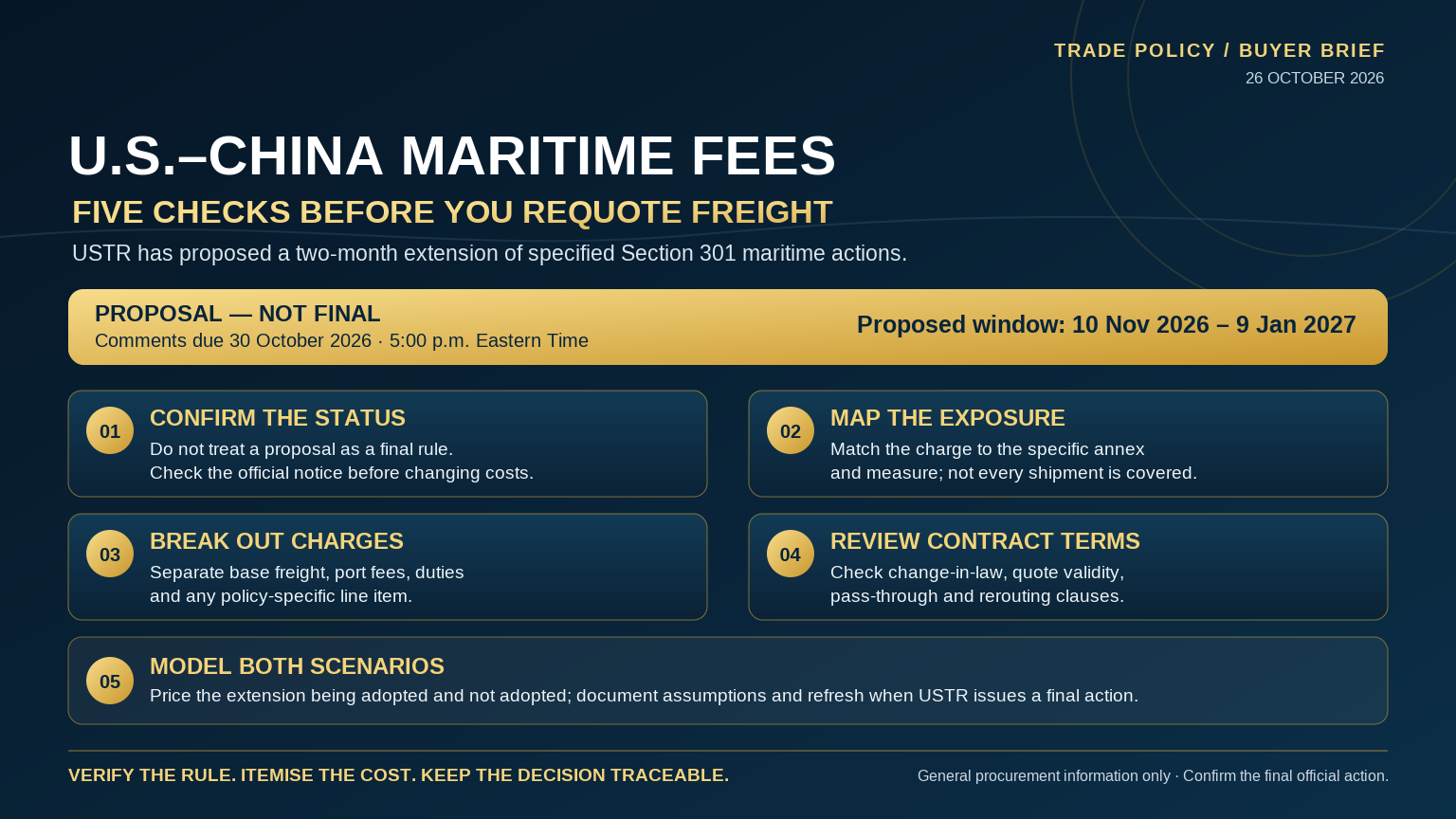
On 26 October 2026, the Office of the United States Trade Representative (USTR) published a request for comments on a proposed two-month extension of the suspension of specified Section 301 actions related to China’s maritime, logistics and shipbuilding sectors. The proposed period would run from 12:00 a.m. Eastern Time on 10 November 2026 through 11:59 p.m. Eastern Time on 9 January 2027. Comments are due by 5:00 p.m. Eastern Time on 30 October 2026. The proposal is not a final decision.
The existing suspension was set to run through 9 November 2026. If the new proposal is adopted, it would continue the suspension of specified fees on maritime transport services under Annexes I, II and III, and certain duties under Annex V.A. Buyers should not assume that every China-linked shipment, carrier charge or equipment cost is covered; the exact measure and annex matter.
Why buyers should review freight quotes now
A policy proposal can affect how counterparties discuss future costs even before it becomes final. Procurement teams should keep legal status separate from commercial assumptions: ask for itemised quotes, identify the basis for each policy-specific charge and avoid treating a proposed extension as an effective exemption.
Five checks before you requote
1. Confirm the rule status and dates
Record that the 26 October notice is a request for comments, not a final modification. The proposed extension would start on 10 November 2026 and end on 9 January 2027. Recheck the official record before approving a quote, issuing a purchase order or changing a landed-cost model.
2. Map the specific exposure
Ask the carrier, forwarder or supplier to identify the exact fee or duty being referenced and the relevant legal basis. Compare it with the specific action and annex cited by USTR. Do not assume that all freight from China, all Chinese-built vessels or every port-related charge automatically falls within the same measure.
3. Separate policy charges from the freight rate
Request a line-item breakdown for base freight, fuel, port or terminal charges, equipment-related duties, insurance and any policy-specific fee. This makes it easier to check whether a charge is actually covered by the action and prevents a policy headline from being counted twice in a quotation.
4. Review contract and quote clauses
Check quote expiry, change-in-law language, surcharges, pass-through rights, cancellation, rerouting and who bears charges that change between booking and shipment. Where the contract permits a cost adjustment, ask for the documented basis and timing. Do not accept a new line item solely because a counterparty refers generally to “Section 301.”
5. Model both outcomes
Prepare two internal scenarios: the proposed extension is finalised, or it is not finalised by the time the shipment is priced or executed. Keep assumptions, quote validity and approval dates visible. Refresh the model only when the official status and relevant contractual treatment are clear.
A practical approval rule
Until a final action is published, treat the extension as a scenario—not a guaranteed saving. Ask counterparties to confirm in writing which charge they believe is affected, which official provision they rely on and whether their quote changes if the proposal is not adopted. Escalate unclear or material exposures to customs or trade counsel before making a binding decision.
Sources
- Federal Register — Request for Comments on Further Suspension of Section 301 Action (26 October 2026).
- Federal Register — Notice of Modification of Section 301 Action (13 November 2025).
- USTR public comments portal.
General procurement information only; not legal, customs, tax or accounting advice. The October 2026 notice is a proposal. Confirm the official final action, applicable annexes and contract-specific treatment before changing commercial commitments.