
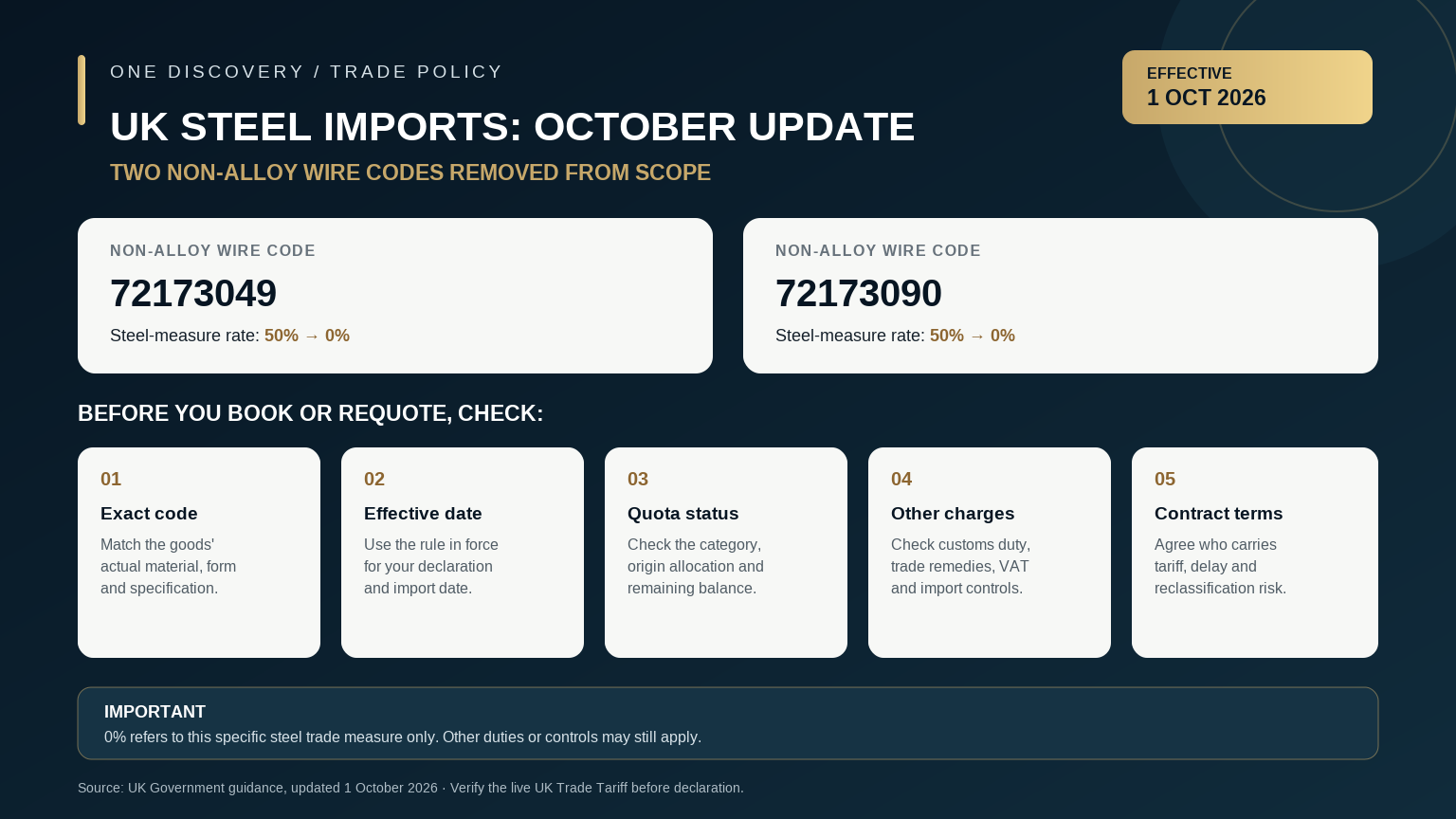
A small change to a commodity-code list can materially alter an import cost model. The UK Government’s steel trade measure guidance, updated on 1 October 2026, says two non-alloy wire codes—72173049 and 72173090—were removed from the measure’s scope, reducing the rate under that measure from 50% to 0% for those codes.
This is a targeted scope change, not a blanket exemption for steel imports. The treatment depends on the goods’ correct classification and the rules in force for the declaration. Other customs duties, trade remedies, VAT, licensing or import requirements may still apply. The UK Trade Tariff should be checked against the actual product and origin before a buyer revises a quotation.
What changed on 1 October?
The UK steel trade measure began on 1 July 2026. It limits tariff-free imports for specified steel products that can also be made in the UK. The government says overall quota volumes were reduced by 51% compared with the previous steel safeguard measure, and imports above the applicable quota face a 50% tariff under the new measure. The previous safeguard quotas and additional 25% safeguard duty ended on 30 June 2026.
The 1 October update removed the two non-alloy wire commodity codes listed above. The published guidance still lists other codes in Category 28, so buyers should not generalise this change to every kind of wire or steel product. A supplier’s product description alone is not enough to establish the correct customs classification.
Five checks before you confirm a purchase
1. Confirm the exact commodity code
Check the product’s material, composition, form, dimensions and production details against the UK tariff classification. Do not rely only on a supplier’s invoice, an overseas code or a broad description such as “steel wire.” If the classification is uncertain, resolve it with a qualified customs adviser or the relevant UK classification process before shipment.
2. Match the rule to the declaration date
Use the official measure as currently published and check the date when the goods will be declared. The scope was amended on 1 October 2026; older spreadsheets, quotations and broker instructions may still carry the previous treatment. Keep a dated copy of the tariff lookup and the applicable guidance in the shipment file.
3. Check quota category, origin and availability
For products still covered by the measure, the tariff-rate quotas are divided by category and quarter. The current quota quarter runs from 1 October to 31 December 2026. The guidance says quota access is administered by HM Revenue & Customs on a first-come, first-served basis. Do not assume that a quota is available simply because a country has an allocation: verify the relevant category, origin treatment, order number and live balance.
4. Rebuild the landed-cost calculation
Separate the measure-specific tariff from ordinary customs duty, any applicable trade-remedy measures, import VAT, freight, insurance, port and handling costs. The two codes’ removal from this measure does not prove that the complete import is duty-free. Check the live UK Trade Tariff for the actual commodity code and country of origin, and record which charges are included in the supplier’s quote.
5. Align the contract and documents
Make sure the purchase contract, commercial invoice, packing list, mill certificate and customs declaration describe the same goods. Agree who bears the cost if classification is challenged, quota access is unavailable, or a declaration is delayed. If the price relies on a particular tariff treatment, document the code, evidence and assumptions instead of leaving them implicit.
What this means for procurement teams
The immediate opportunity is not to assume that every steel quote should fall. It is to identify shipments whose declared products may match the two removed codes, validate the classification, and then rerun the full landed-cost calculation. For products that remain covered, quota timing and availability can still be important commercial variables.
For buyers with open purchase orders, the practical next step is to compare the code and duty assumptions in the original quote with the current official guidance. Ask the customs broker to confirm the intended declaration treatment before using any expected saving in a negotiation or payment approval.
Editorial note: This article summarises public UK Government guidance and is not legal, tax or customs advice. Classification and duty liability depend on the specific goods, origin, declaration and other measures in force. Verify the current tariff and obtain qualified advice where needed.
Sources
- UK Government — UK’s steel trade measure from 1 July 2026 (scope, codes, quotas and duty amount; updated 1 October 2026).
- UK Government — Publication update history for the steel trade measure (1 October 2026 scope amendment).
- HM Revenue & Customs — Trade Tariff: commodity codes, duty and VAT rates.
- HM Revenue & Customs — Finding commodity codes for imports into or exports out of the UK.