
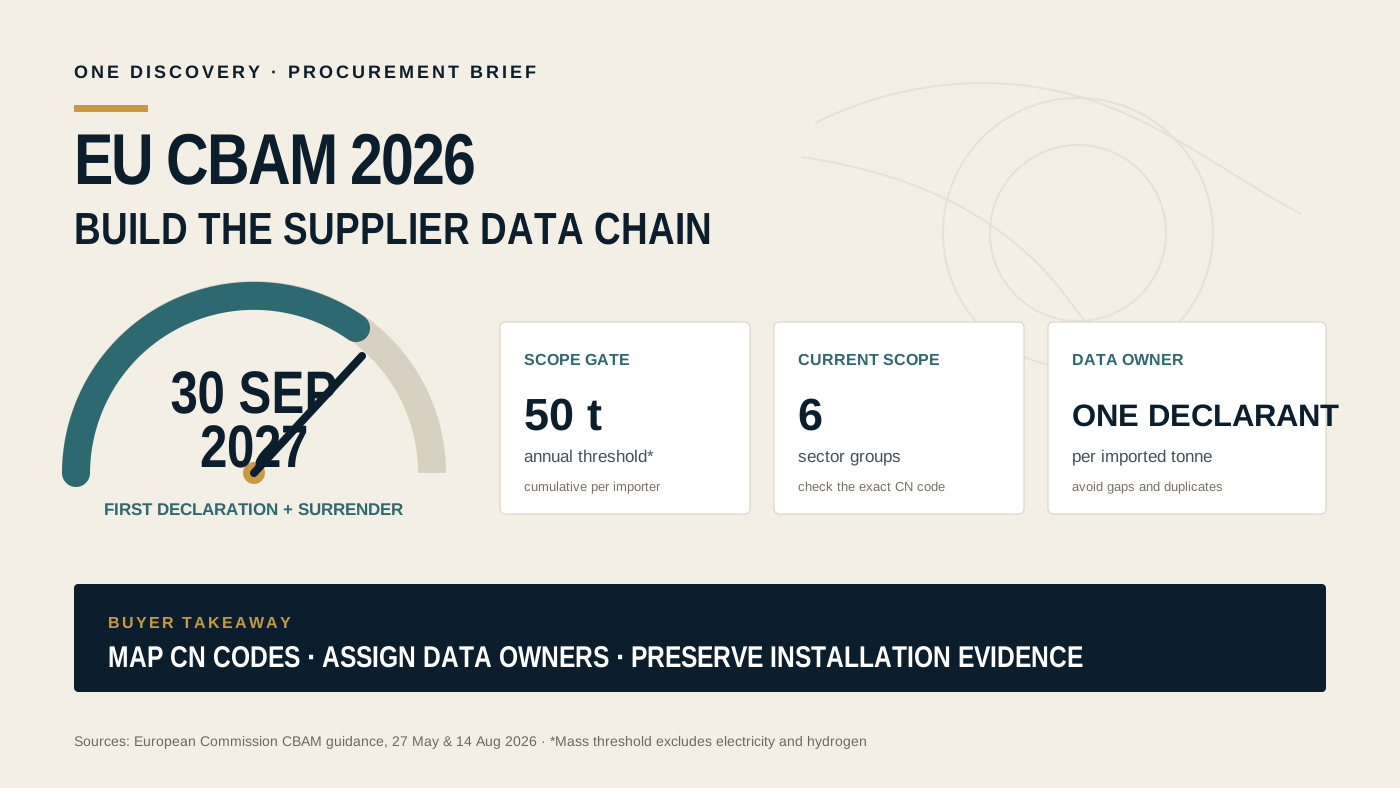
EU procurement teams importing carbon-intensive goods now need a repeatable supplier-data handoff, not a last-minute sustainability questionnaire. The Carbon Border Adjustment Mechanism (CBAM) entered its definitive phase on 1 January 2026, and the first annual declaration for 2026 imports is due by 30 September 2027.
The practical task is to connect customs classification, the responsible declarant, the producing installation and verified embedded-emissions data to each shipment. Buyers should build that chain now: a commercial invoice or generic product carbon footprint may not contain enough information for the authorised CBAM declarant.
Start with scope and responsibility
CBAM currently covers specified goods in six sectors: cement, aluminium, fertilisers, iron and steel, hydrogen and electricity. Coverage is determined by the Combined Nomenclature (CN) code in the regulation, not by an informal product description. Procurement should therefore confirm the code with customs specialists before requesting emissions data.
The 50-tonne annual threshold also needs careful treatment. It applies cumulatively per importer to covered goods in the cement, iron and steel, aluminium and fertiliser sectors. An importer that exceeds it becomes responsible for all covered imports in that calendar year, including the tonnes below the threshold. Electricity and hydrogen are not included in that mass-based exemption.
Legal responsibility sits with the authorised CBAM declarant—normally the EU importer or, in some cases, an indirect customs representative. A non-EU producer supplies critical operational data but does not replace the declarant. Every shipment should therefore name one accountable declarant and one supplier-side data owner.
Build one data record around the producing installation
A usable CBAM record should connect the shipment to how and where the goods were produced. At minimum, the buyer’s file should capture:
- the CN code, quantity, origin and import date;
- the authorised declarant and customs declaration reference;
- the non-EU installation and operator that produced the goods;
- the production route and relevant precursor inputs;
- direct embedded emissions and indirect emissions where in scope;
- the calculation method, reporting period and underlying activity data;
- the applicable verification report when actual data is used; and
- any carbon price effectively paid in the country of production, with evidence supporting a claimed deduction.
The installation link is decisive. Two suppliers can sell materially similar steel or aluminium while using different production routes, electricity mixes or precursor sources. A corporate average or marketing-level footprint may hide those differences and may not be calculated on the CBAM basis.
The European Commission’s August 2026 guidance for non-EU operators is especially useful because it separates general concepts, calculation methods and sector-specific instructions. Procurement teams should reference the correct guidance version in the supplier request rather than paraphrasing the methodology inside each purchase order.
Turn the requirement into a controlled supplier handoff
The strongest process has defined gates before shipment, not a scramble before the annual declaration.
- Classify before quotation. Confirm whether the requested CN code is covered and whether the importer’s cumulative volume could cross the annual threshold.
- Assign the declarant. State whether the importer or an indirect customs representative will carry the CBAM obligation. Align this with the customs mandate and shipment documents.
- Qualify the installation. Record the producer, installation identifier, country, product route and the person authorised to communicate emissions data.
- Test the data package. Check units, boundaries, reporting period, precursor treatment, calculation method and verification status before accepting the first commercial shipment.
- Control revisions. Keep a versioned communication file and link it to shipment quantities. Record who changed a value, why and when.
- Reconcile quarterly. Compare customs entries, supplier files and the declarant’s registry records so missing or duplicate tonnes are found early.
This workflow belongs across procurement, customs, sustainability and finance. Procurement controls supplier access and contract leverage; customs controls codes and declarations; sustainability understands calculation evidence; finance needs the future certificate and carbon-price exposure.
Contract for evidence, timing and correction
A purchase contract cannot transfer away the importer’s statutory responsibility, but it can make the supplier’s data duties executable. Relevant clauses should define:
- the exact installation and production route represented by the data;
- the required Commission template or agreed structured format;
- delivery dates for preliminary and verified figures;
- cooperation with an accredited verifier and responses to queries;
- notice before a production-route, precursor or installation change;
- correction procedures when customs quantities and supplier records differ; and
- confidentiality and permitted disclosure to the declarant, verifier and authority.
Avoid a blanket warranty that a generic emissions number is “CBAM compliant.” It is more useful to specify the method, evidence, reporting period and responsible parties. The same disciplined landed-cost comparison used for regional copper sourcing applies here: two nominally similar offers may carry different documentation effort and carbon exposure.
Treat 30 September 2027 as the end of the process
For goods imported in 2026, the authorised declarant must submit the first annual CBAM declaration and surrender the corresponding certificates by 30 September 2027. Certificate sales begin on 1 February 2027. The declaration must cover quantity and origin, embedded emissions, relevant verification, the free-allocation adjustment and any eligible carbon price paid abroad.
That deadline is not a reason to defer data collection. Installation operators need time to calculate emissions, resolve precursor gaps and obtain verification. Importers also need time to reconcile supplier records with customs data. A missing installation record discovered in September 2027 will be harder to repair than a failed data test discovered before the next shipment.
The commercial relevance is already visible. Reuters reported on 14 September 2026 that expanded preferential steel access contemplated under the EU-India trade agreement would not itself remove CBAM exposure. Tariff preference, origin qualification and carbon obligations are separate checks; procurement teams should not assume success on one resolves the others.
The One Discovery view
BUYER SIGNAL
CBAM readiness is a chain-of-custody problem for data. Link each shipment to its declarant, installation, method and verification evidence.
CBAM readiness is a chain-of-custody problem for data. The decisive question is not whether a supplier can provide a carbon figure, but whether the buyer can connect the correct CN code and shipment quantity to the responsible declarant, producing installation, approved methodology and verification evidence.
The practical priority is to test one complete data handoff per supplier and production route, then reconcile it against customs entries throughout the year. That exposes classification, ownership and evidence gaps while there is still time to correct them—and makes future carbon cost part of sourcing analysis rather than an unexplained year-end charge.
Sources
Discuss a qualified sourcing requirement or compliance-ready supplier process.
Contact One Discovery