
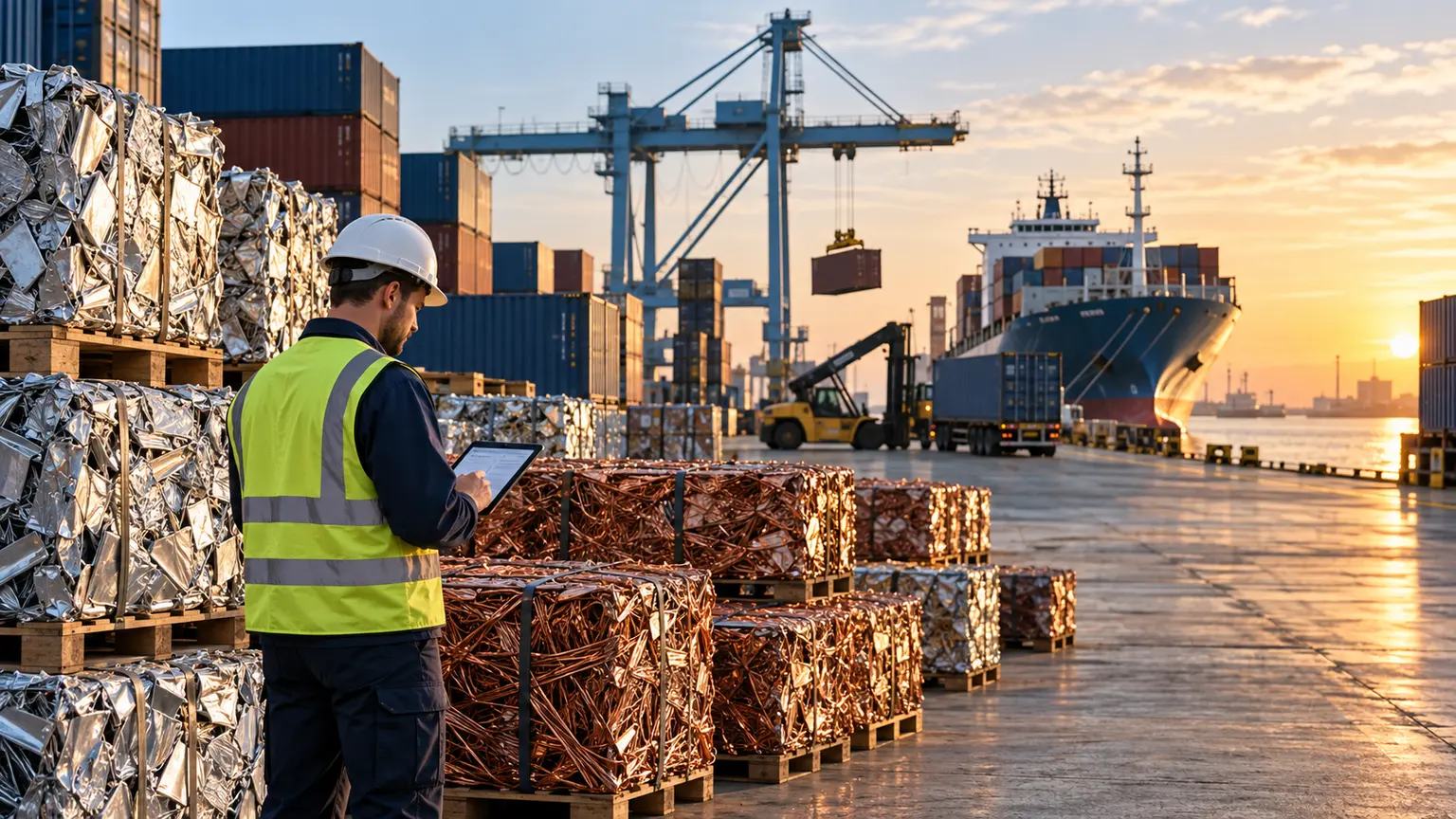
Indian metal scrap buyers sourcing from the European Union face a material compliance change from 21 May 2027. Under the EU Waste Shipment Regulation, exports of non-hazardous “green-listed” waste to non-OECD countries will generally be prohibited unless the destination country is authorised after demonstrating environmentally sound management.
The immediate signal is a draft—not a final prohibition on India. On 18 September 2026, the European Commission published a proposed list of non-OECD countries that could remain authorised. Reuters reported that India was not included in that draft. The Commission’s consultation remains open until 16 October, and the first final list is due by the end of 2026. Procurement teams should therefore prepare for disruption while continuing to monitor the final legal position.
What is confirmed and what is still provisional
The legal framework is confirmed. The Commission states that most export rules under Regulation (EU) 2024/1157 apply from 21 May 2027. Non-hazardous waste exports to non-OECD destinations will then be allowed only through defined exceptions, while hazardous waste exports for recovery and waste exports for disposal remain prohibited.
The country outcome is not final. The Commission received requests from 32 non-OECD countries and published a draft list after assessing their capacity to manage waste sustainably. It has invited stakeholder feedback and says the first authorised-country list will be established by the end of 2026, then reviewed at least every two years.
That distinction matters commercially. A buyer should not present the draft as proof that all EU scrap exports to India will stop. Equally, a buyer should not assume current routes will remain available. The defensible planning assumption is conditional access with meaningful regulatory uncertainty.
Why metal buyers should care now
Metal scrap is a secondary raw material, but it can also be legally classified as waste. That classification connects the cargo to environmental shipment rules in addition to quality, customs and trade requirements. A contract calling material “recyclable metal” does not determine its regulatory status.
Reuters reported in June that India imported about 366,000 tonnes of aluminium scrap from the EU in 2025 and that Indian industry groups were seeking relief from the pending rules. Those figures show the possible scale of exposure, but they do not establish the position of every metal, exporter or facility. Copper, aluminium and mixed-metal streams can differ by code, contamination, preparation and end use.
The practical risk is not only higher price. Supply can become non-executable if the destination is not authorised, the receiving facility cannot satisfy the required environmental conditions, or the EU exporter cannot obtain acceptable independent audit evidence.
Country approval is only the first gate
Even if India appears on the final list, individual shipments will still require careful execution. The Commission says EU exporters must demonstrate that waste is properly managed at the receiving facility and arrange independent audits. Without a positive audit, the exporter must stop shipping to that facility.
Buyers should build a facility-level evidence file rather than rely on a trader’s general assurance. It should identify the licensed importer and end facility, permitted waste codes, processing route, environmental controls, capacity, traceability, inspection rights and the audit evidence acceptable to the EU exporter.
The material description also needs discipline. Specifications should define the intended grade, contamination limits, prohibited attachments, moisture, radiation screening where relevant, sampling method and rejection procedure. Our earlier copper scrap specification checklist explains why a headline purity percentage is not a complete buying standard.
Contracts need a regulatory-change route
Long-term supply agreements extending beyond May 2027 should state what happens if the destination country, waste code or receiving facility is no longer eligible. A generic force-majeure clause may not allocate this risk clearly enough.
Procurement and legal teams should review:
- the precise material and waste classification used in the EU export filing;
- the responsible exporter, importer and receiving facility;
- which party bears audit, permit, storage, demurrage and return-shipment costs;
- rights to suspend, substitute origin, change destination or terminate;
- the point at which title, risk and payment obligations transfer; and
- the evidence required before a shipment or prepayment is released.
These controls should align with customs readiness. Our analysis of EU importer data requirements shows why product codes, counterparties and shipment records must be consistent across commercial and regulatory documents.
Build an origin and inventory fallback
Buyers should map how much of their 2027 requirement depends on EU-origin scrap, then qualify alternatives before capacity becomes crowded. The comparison should include grade consistency, recovery yield, freight, duties, working capital, inspection, environmental compliance and delivery reliability—not only the seller’s discount.
Possible responses include additional domestic collection, alternative OECD or non-OECD origins where lawful, primary metal substitution, toll-processing arrangements and higher safety stock for critical grades. Each alternative brings different cost and compliance assumptions, so it should be tested as a delivered scenario rather than treated as an automatic replacement.
The procurement conclusion
The EU’s draft list is a planning trigger, not a final verdict. Indian buyers have a limited window to verify country status, strengthen receiving-facility evidence, revise contracts and qualify alternative supply.
The central lesson is broader than scrap: regulatory eligibility is part of physical availability. A cargo is not truly available when it has a price and a seller; it is available when its classification, route, facility, documents and compliance controls can all survive execution.
ONE DISCOVERY VIEW
Do not wait for the first rejected shipment. Treat the draft list as a scenario-planning signal, while clearly separating proposed country status from the final implementing decision.
Sources
- European Commission — Draft list of countries authorised to import EU waste, 18 September 2026
- European Commission — Waste shipments rules and implementation timeline
- Reuters — EU waste proposal and India’s metal scrap imports, 18 September 2026
- Reuters — India seeks EU scrap export relief, 29 June 2026
Prepare the classification, facility and contract file before the rule change reaches the loading schedule.
Contact One Discovery