
Nth Cycle announced on 22 September 2026 that it had signed a binding term sheet with Glencore for a strategic partnership built around recycled battery materials. The company described a projected ten-year value of more than $1 billion, based on forecast pricing from the second quarter of 2026.
For procurement teams, the useful lesson is not the headline value. It is the structure underneath it: the arrangement covers future feedstock, future processing capacity and future offtake. A long-term commercial commitment can improve supply security, but it is not the same thing as verified inventory ready to ship today.
What the announcement actually covers
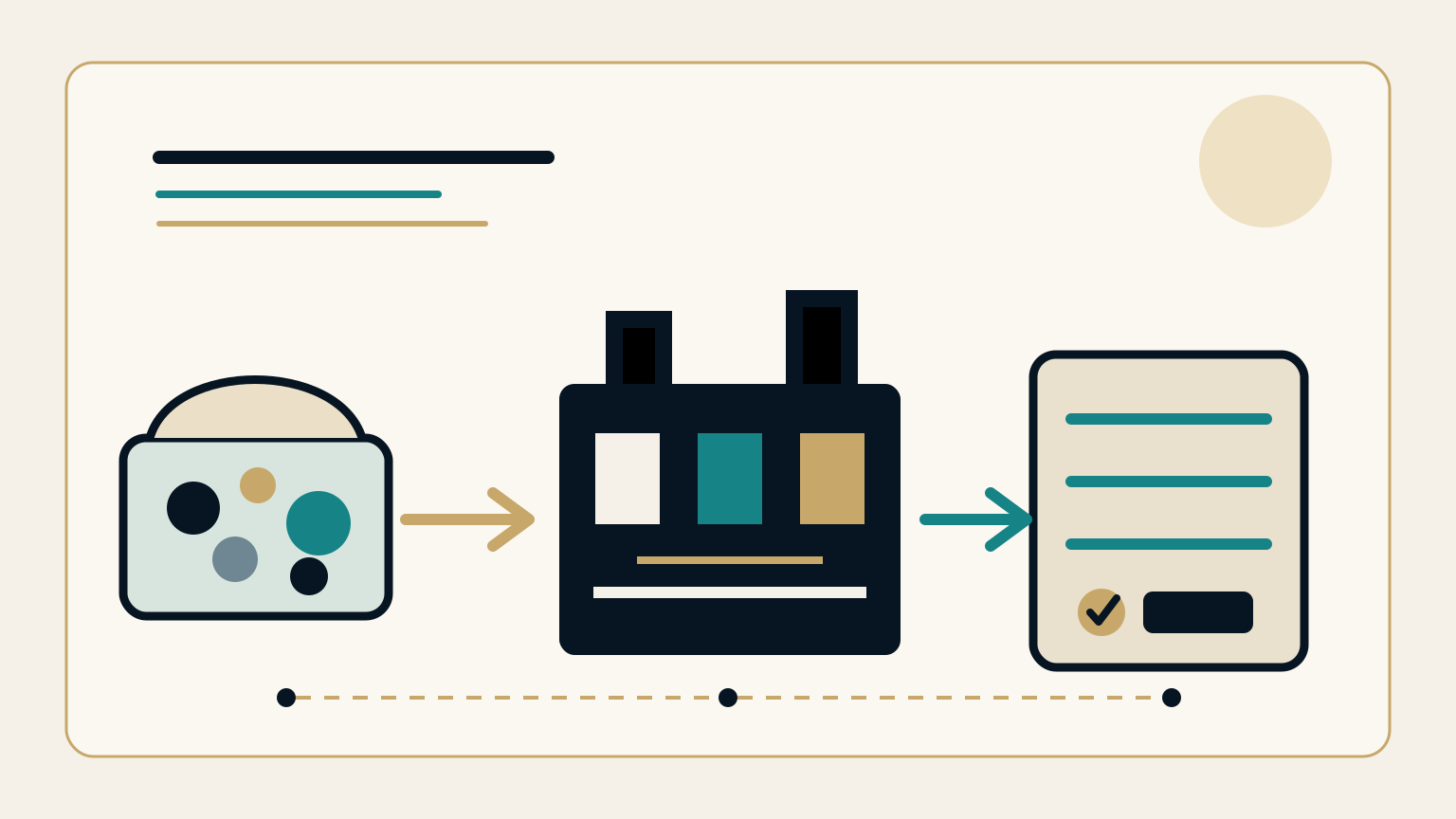
The company announcement says Glencore would provide all black-mass feedstock for Nth Cycle’s planned Project SHIELD facility. Glencore would also take the mixed hydroxide product and battery-grade lithium carbonate produced by the project, while the parties assess an existing Glencore site in the United States for development.
Reuters separately reported the agreement and its expected value. The two accounts support the same broad conclusion: this is a strategic arrangement intended to connect recycled feedstock, refining capacity and a route to market over many years.
However, the company’s wording matters. A binding term sheet is an important commercial milestone, but buyers should not automatically read the projected value as a fixed purchase price, a guaranteed production volume or current inventory. The estimate is linked to forecast pricing and a ten-year horizon.
Why an offtake matters before production
Critical-minerals projects often need substantial capital before commercial output begins. A credible buyer or marketing partner can help demonstrate demand, create a route to market and support project financing. A committed feedstock source can also reduce the risk that a recycling facility is built without enough material to process.
The structure can therefore solve two problems at once: where the plant obtains black mass and where its refined products go. That integration is commercially valuable because a refinery without consistent feedstock or qualified customers may struggle even if its technology performs well.
The wider supply-chain relevance is clear. The U.S. Economic Development Administration describes black mass from battery recycling as a secondary source for critical-minerals recovery and is supporting processing capacity intended to strengthen downstream advanced manufacturing. The OECD also stresses that responsible mineral supply requires due diligence across increasingly important and potentially high-risk supply chains.
The five gaps buyers still need to close
A headline agreement does not remove execution risk. Before treating future output as dependable supply, a buyer should close five evidence gaps:
- Feedstock. Confirm expected black-mass volumes, chemistry, origin, collection channels and contamination limits.
- Facility readiness. Separate site selection, permitting, financing, construction, commissioning and commercial operation into dated milestones.
- Product specification. Define contained metals, purity, moisture, impurities, sampling, assay and rejection rights for MHP or lithium carbonate.
- Volume profile. Distinguish nameplate capacity from ramp-up output, minimum committed tonnage and optional volumes.
- Delivery terms. Agree title transfer, Incoterms, logistics, payment triggers, price formula and remedies for delay or shortfall.
Each gap can change whether a contract is bankable and whether the material is usable by the next processor. A lithium product that misses battery-grade specifications is not interchangeable with qualified supply simply because it contains lithium.
Projected value is not the same as guaranteed revenue
Long-term values are often calculated using assumed prices and forecast quantities. Both can move. Commodity prices may rise or fall, the project may ramp more slowly than planned, and specifications or customer qualification can limit saleable output.
Procurement teams should request the calculation behind any public value figure: reference price, index, floor or ceiling, payable content, forecast tonnage and the period covered. They should also determine whether the agreement is take-or-pay, requirements-based, subject to conditions precedent or dependent on future definitive documentation.
This is not a criticism of the transaction. It is the correct way to translate a strategic announcement into an executable supply assumption. The stronger the underlying milestones and remedies, the more useful the offtake becomes for both financing and procurement planning.
A practical diligence sequence
- Verify the legal parties and authority of the signatories.
- Obtain the executed agreement or an authorised summary of binding obligations.
- List every condition that must be satisfied before supply begins.
- Match feedstock commitments to realistic recovery yields and production output.
- Confirm independent sampling, assay and product-qualification procedures.
- Model base, delayed-ramp and low-price scenarios.
- Keep alternative supply until commercial deliveries are demonstrated.
The same discipline applies to smaller commodity transactions. One Discovery’s potash execution guide explains why product, logistics, documents and payment must align. Our EU scrap-export guide shows how upstream evidence can determine whether secondary material is legally and commercially deliverable.
The procurement conclusion
The Nth Cycle–Glencore announcement is evidence that recycled battery materials are moving toward longer-term, integrated supply arrangements. It connects feedstock, refining and offtake in a way that may help new processing capacity reach commercial scale.
But the headline value should be treated as a project framework, not a warehouse balance. Buyers should build supply plans around verified milestones, specifications and committed volumes—not the largest number in the announcement.
ONE DISCOVERY VIEW
An offtake can de-risk demand. It does not remove delivery risk. Executable supply begins when feedstock, facility readiness, product quality and logistics are independently verifiable.
Sources
- Nth Cycle company announcement — binding term sheet with Glencore, 22 September 2026
- Reuters — Nth Cycle and Glencore critical-minerals agreement, 22 September 2026
- U.S. Economic Development Administration — critical-minerals processing and black-mass recovery
- OECD — responsible mineral supply chains and due diligence
Turn a headline offtake into an evidence-based delivery plan.
Contact One Discovery