
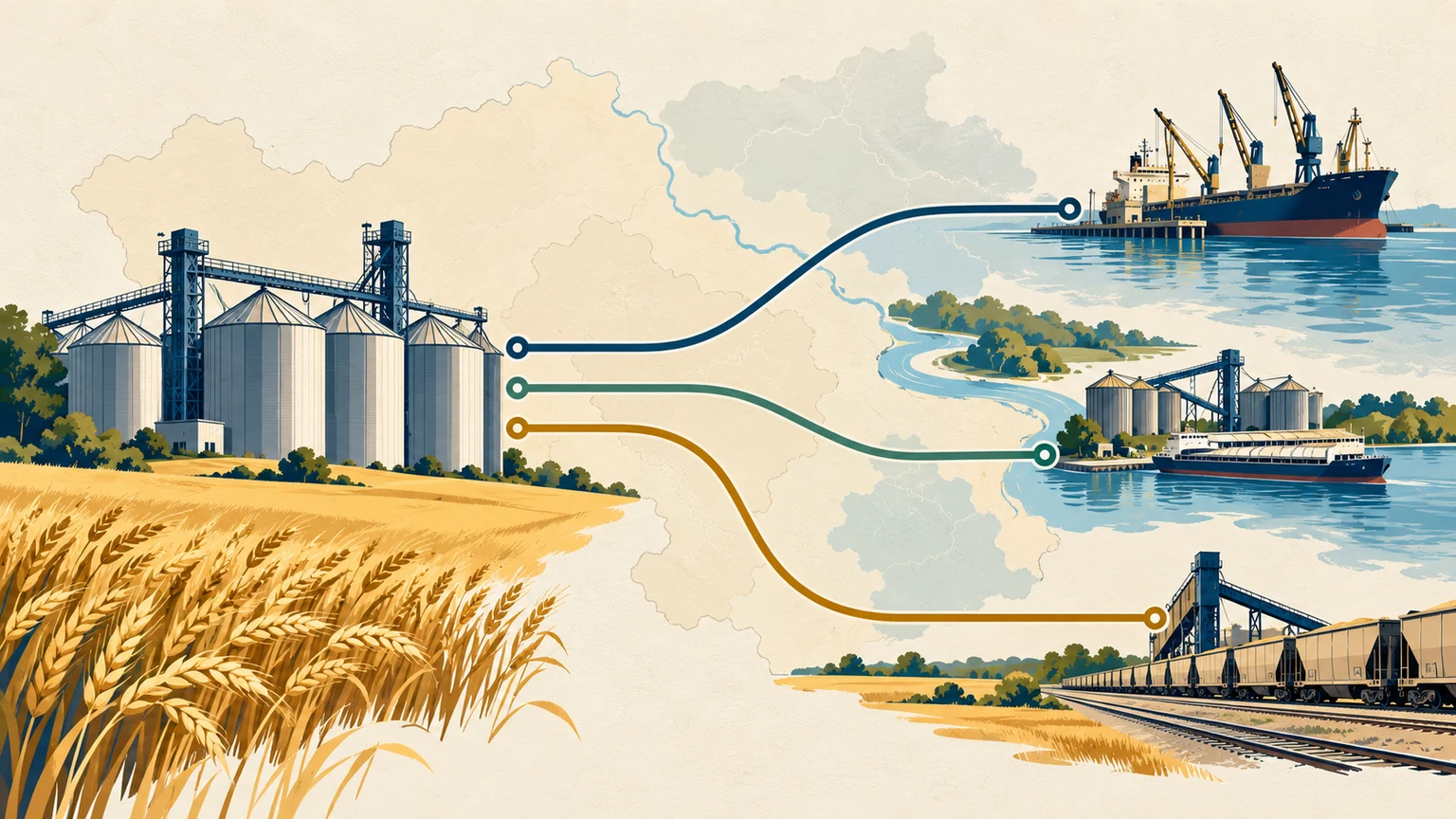
Ukraine's September agricultural exports were well below the pace needed for its stated seasonal ambition. The agriculture minister reported 2.2 million tonnes shipped in September against an expected 64 million tonnes for the season. That is a warning about logistics, not proof that any particular wheat or corn cargo is unavailable. Import buyers should ask where the grain is, which route is booked, and whether the delivery window is executable before comparing headline offers.
The government says restrictions at the Greater Odesa ports have affected maritime movements since July 21. At a September 28 EU agriculture meeting, the minister proposed support for longer alternative routes and warned that more than 30 million tonnes could remain unexported by season end if restrictions persist. Those are conditional government projections, not measured losses. Reuters reported on September 30 that a farming union opposes giving scarce transport capacity preferentially to higher-value oilseeds and processed products. No final priority rule is established by that report.
What the September numbers show
The government's September 24 update counted 1.6 million tonnes of agricultural exports in the first 21 days of the month, 43% of its plan for that period. Grain accounted for 960,000 tonnes, or 38% of its planned volume. Oilseeds were 275,000 tonnes, or 75% of plan; oils were 190,000 tonnes, or 55%. The later September 28 ministerial statement put total September exports at 2.2 million tonnes. These observations cover different dates and should not be confused with a single comparable monthly series.
Reuters reported ministry data indicating grain exports had fallen by more than 60% in September, while oilseed and vegetable-oil shipments declined by about a third. The comparative percentages and the 2.2 million-tonne total answer different questions. Together, they show a constrained corridor with uneven effects across products. They do not disclose the quantity contracted, the origin of a specific lot, or a ship's actual loading status.
Why cargo choice matters
When transport capacity is scarce, a higher-value product can bear a larger per-tonne logistics bill than bulk grain. Reuters reported the Ukrainian Agrarian Council's argument that oilseeds already enjoy this commercial advantage and should not receive additional priority. That is the union's position. The minister had earlier said the ministry backed a proposal from some farming groups to prioritize higher-value products, according to Reuters. Buyers should not treat this debate as an enacted allocation rule or assume grain has been legally excluded from any route.
Ukraine says seaborne transport handled around 80% of its agricultural export logistics in 2026. Danube ports, rail, road and EU Solidarity Lanes provide alternatives, but they differ in handling capacity, transshipment points and cost. The government estimated additional costs on longer alternative routes at around EUR 50 per tonne compared with existing Solidarity Lanes movements. That is a policy estimate, not a freight quote for an individual cargo.
A route checklist before accepting an offer
First, identify the physical lot and the seller's authority to sell it. Ask for the storage location, crop year, grade, quantity tolerance, inspection standard, and any warehouse or title document that applies. A national stocks figure or a photograph does not establish control of the proposed cargo.
Second, request the route as an operational chain. For a seaborne offer, confirm the named loading port, terminal, nomination status, laycan, vessel class and who bears disruption or demurrage risk. For a Danube or rail route, identify each handoff, border crossing, transshipment point and onward port. Ask which legs are reserved and which remain estimates.
Third, compare offers on a common delivered basis. Set the destination, Incoterm, insurance obligation, inspection point and documentary requirements before comparing nominal prices. A change of export corridor can change the risk allocation and landed cost even when the commodity price is unchanged. Check payment milestones against independently verified documents rather than an assumed sailing schedule.
Fourth, build a delay response into the contract. Specify notice periods, replacement routes, quality at delivery, force majeure wording, and remedies if loading slips. Obtain current independent logistics and insurance advice for the actual shipment. Do not rely on a market article as a statement that a route is safe or open on a future date.
What buyers should watch next
Watch realized export volumes, port operating notices, rail and Danube capacity, and any formal decision on cargo priority. The Ukrainian government's warning that more than 30 million tonnes might remain unexported is conditional on continuing restrictions. Reuters also reported grain stocks had risen by 10 million tonnes year on year to 24.6 million tonnes by September 1, underscoring the storage pressure; stocks do not equal saleable export inventory.
A buyer can still explore Ukrainian grain, but should make each offer prove its route, documentation and timing. The practical question is not simply whether grain exists. It is whether the named cargo can move through a verified corridor on the contractual terms. Related reading: alternative Black Sea and Baltic routes and the Insights archive.
Sources
Verify the cargo behind the market signal.
Explore all insights