
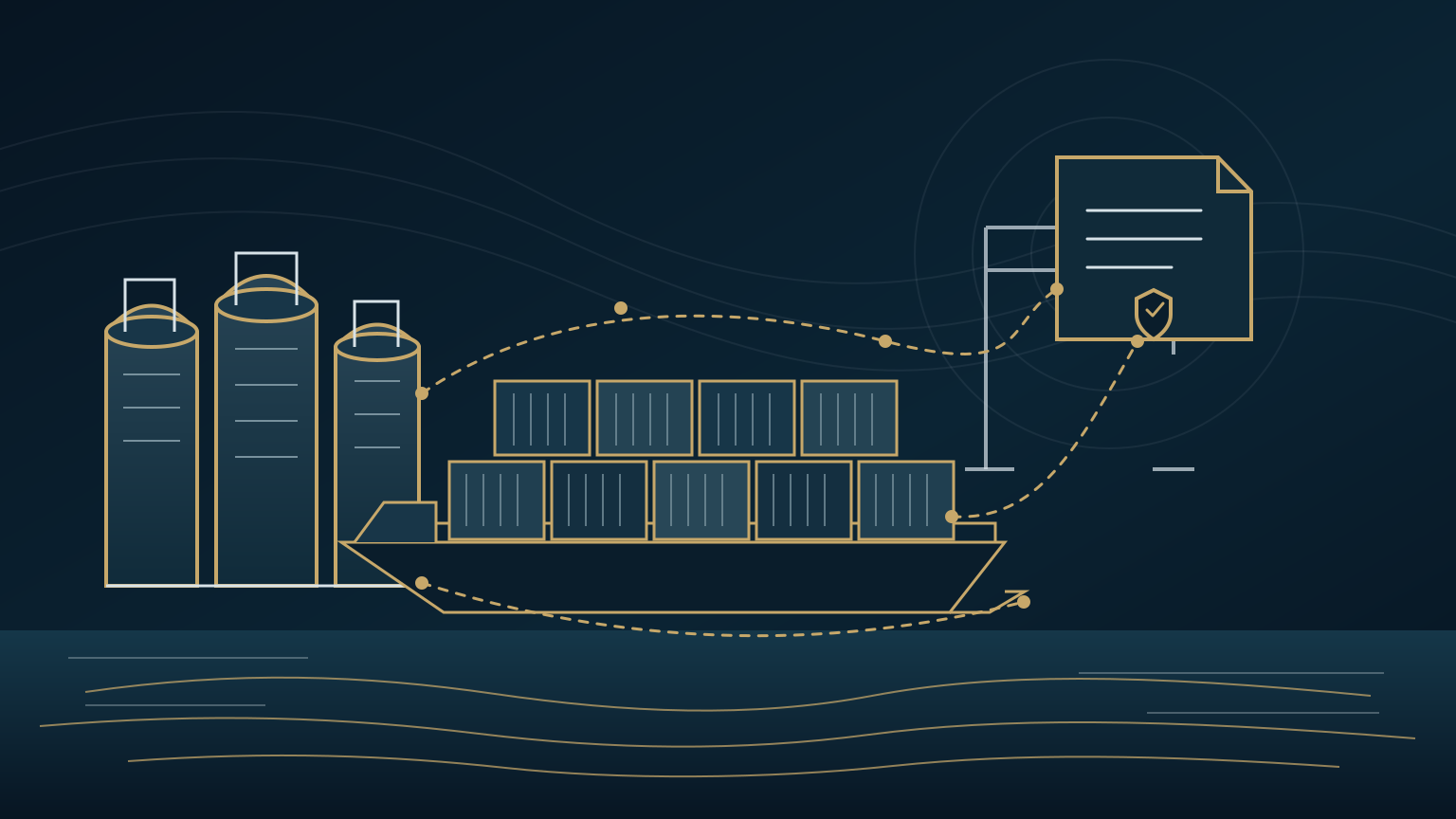
A new security report does not mean every grain shipment is compromised. It does show why buyers should treat email, shipment records, payment instructions and document systems as part of the supply chain—not as administrative details.
BUYER TAKEAWAY
Verify the communication path, not just the document. A believable invoice or shipping instruction is not enough if the sender account, file history or payment details cannot be independently confirmed.
What the report establishes—and what it does not
On 22 October 2026, cybersecurity firm ESET published research describing an earlier intrusion at an unidentified Ukrainian grain logistics company. ESET said the initial access began with a targeted phishing email carrying a malicious attachment on 16 July 2025, and that the activity later culminated in a destructive data-wiping operation. ESET attributed the initial access to UAC-0099 and the later destructive activity to Sandworm; these are the researcher's assessments.
Reuters reported that the victim company was not identified publicly and that it could not confirm whether grain operations were disrupted. The report therefore does not establish that a particular supplier, buyer or cargo is currently affected, nor does it establish a market-wide grain loss. Its practical value is narrower: it shows that the digital records supporting physical trade can be targeted.
Why this matters to procurement
A grain transaction relies on more than the commodity itself. Buyers and suppliers exchange contracts, invoices, bills of lading, inspection and quality certificates, loading instructions, delivery schedules and payment approvals. If an email account is compromised or key records are altered, lost or unavailable, teams may struggle to establish which document is current, whether an instruction is authentic, or whether a payment change is legitimate.
That is a verification problem, not proof that a cargo is fake. Keep the distinction clear: market data helps explain conditions; transaction records help establish what a specific counterparty has agreed to deliver. Our grain export dashboard guide explains why aggregate inspection data cannot validate a specific lot, while the warehouse receipt verification checklist covers physical stock, title and collateral.
Six checks before sharing cargo documents
- Confirm the sender through a known channel. Do not rely on a display name, a familiar-looking email thread or a phone number included in a suspicious message. For a new bank account, loading instruction or document-release request, contact the counterparty through details already verified in your records. If the details do not match, pause and confirm before acting.
- Treat unexpected attachments as untrusted. If an invoice, shipping instruction, inspection certificate or archive arrives unexpectedly, verify that it was sent and is expected before opening it. Use the organisation's approved document portal where possible. Do not enable macros, install viewers or follow sign-in links merely because a message appears to come from a supplier, freight forwarder or inspection company. Send suspicious messages to your internal security contact.
- Require multifactor authentication for business email and file access. Email and shared-document accounts often sit at the centre of the transaction workflow. CISA recommends multifactor authentication and advises organisations to use stronger, phishing-resistant methods where possible. Apply MFA to business email, cloud storage and remote access; use individual accounts, restrict administrator rights and remove access that is no longer needed.
- Limit document access and preserve versions. Share only the files a recipient needs, with named users and time-limited access where supported. Keep version history and access logs for key transaction records. Avoid broad public links or generic shared folders for complete shipment packs. A document that can be downloaded, replaced or forwarded without an audit trail is harder to verify after a dispute.
- Reconfirm bank-detail and shipment changes independently. A request to change a beneficiary, bank account, loading window, destination or document recipient should trigger a separate check. Compare the change against the signed contract and prior approved instructions, then confirm it through a known contact route. For payment changes, use a second-person review under your internal controls. Do not treat a reply from the same potentially compromised mailbox as independent confirmation.
- Test backups and incident contacts before a problem occurs. Maintain protected, recoverable copies of core contracts, invoices, bills of lading, inspection records, correspondence and payment approvals. Test restoration rather than assuming that a backup is usable. Keep an incident contact list separately from the main email system, agree who can stop a payment or document release, and define how counterparties will be notified if an account or shared folder is compromised.
Turn the checklist into a release gate
Use a simple decision rule before releasing sensitive documents or funds:
- Proceed when the sender, document version, payment details and approval path match the agreed process.
- Pause when an attachment, instruction or account detail is inconsistent but can be checked.
- Escalate when an account may be compromised, records disappear, or a counterparty pressures the team to bypass normal checks. Contact your security lead and the counterparty through a separately verified channel. Do not use the same suspect communication as proof that the request is genuine.
These controls should be proportionate to the transaction and the systems involved. They do not replace a cybersecurity assessment, contract review or the checks required by your bank and payment providers. They make it harder for an unverified message or missing record to become an avoidable commercial loss.
Sources
Market information only. This article is not a cybersecurity audit, legal opinion or claim that any specific counterparty is compromised. Apply your own security policies and obtain qualified advice for suspected incidents.