
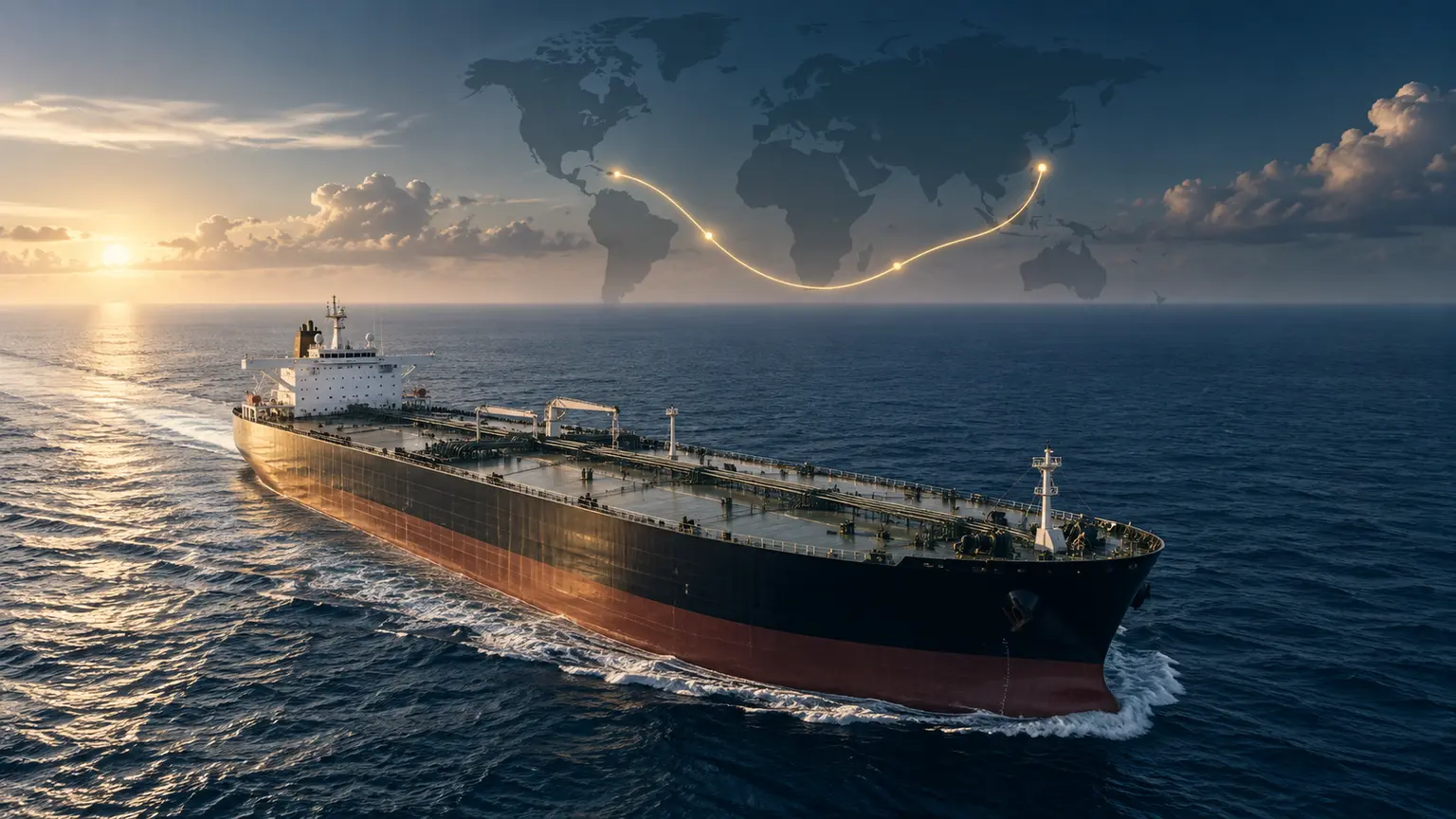
Shipowners have accelerated orders for very large crude carriers (VLCCs) as Middle East disruption pushes more oil onto longer routes. Reuters reported that more than twice as many VLCCs had been ordered in 2026 as in all of 2025, while the International Energy Agency said tanker costs rose sharply alongside security risks and stronger demand for ships.
For buyers, the important signal is not simply that more vessels will eventually enter service. The immediate issue is that longer voyages, constrained Middle East flows and additional handling are consuming available vessel time now. Procurement teams should therefore treat freight, insurance, laytime and delivery windows as active commercial variables rather than secondary logistics details.
What changed in the tanker market
Reuters reported on 17 September that Signal Group counted 217 VLCC orders in 2026, compared with 93 in 2025. Allied Shipbroking recorded 164 orders versus 83 a year earlier. The precise totals differ because the data providers use different methodologies, but both show the same direction: ordering has more than doubled.
A VLCC can carry roughly two million barrels of oil. The newbuilding wave is being driven by several connected pressures: longer Atlantic-to-Asia voyages, the need to replace an ageing fleet and exceptionally strong freight earnings. Reuters also reported that about 20% of the VLCC fleet is more than 20 years old, according to Veson Nautical.
The distinction between orders and available capacity matters. Recent contracts include deliveries in 2029 and 2030. Those ships may improve future fleet availability, but they cannot relieve a prompt cargo programme. A buyer negotiating current supply still depends on the vessels, crews, insurance and port windows available today.
Why longer routes consume more capacity
When a cargo moves farther, the same vessel completes fewer voyages over a given period. Atlantic Basin crude moving to Asia requires more sailing days than many established Middle East-to-Asia trades. Additional shuttle movements or ship-to-ship transfers can also extend the operating cycle.
The IEA's September Oil Market Report described the current pressure from another angle. It said tanker traffic out of the Middle East had come under renewed attack, oil-on-water volumes fell by 65 million barrels in August, and tanker costs increased sharply as security risks and demand for ships rose. The report also said Gulf oil exports remained materially below pre-war levels and that alternative flows were supporting longer-distance trade.
This creates a tonne-mile problem: nominal fleet size may appear adequate, yet effective capacity tightens because each cargo occupies a vessel for longer. That is a market-level inference, not a guarantee that every route will be short of ships. Availability must still be checked for the exact loading window, vessel class and port pair.
What the order boom does—and does not—tell buyers
The orderbook supports three practical conclusions.
First, shipowners expect longer-haul crude movements to remain commercially relevant. New vessels scheduled for 2029 or 2030 are long-lived capital decisions, not a response to one week of volatility.
Second, replacement demand is part of the story. A larger orderbook does not automatically produce equivalent net fleet growth if older vessels are retired, become commercially restricted or operate outside mainstream chartering and insurance markets.
Third, newbuilding activity does not cap near-term freight. Reuters reported VLCC spot rates above $500,000 per day in the recent surge, compared with about $132,000 in February, citing Allied Shipbroking. That observation is market evidence from a volatile period, not a freight quote. Buyers should obtain current route-specific indications before calculating landed cost.
What procurement teams should verify now
Separate commodity price from delivered economics
Compare offers on a delivered basis. A lower crude differential can be offset by higher freight, war-risk insurance, deviation costs, port charges, demurrage or financing costs for a longer voyage.
Confirm the vessel plan before accepting the ETA
Ask whether the vessel is nominated, merely indicated or still to be chartered. Confirm class, flag, ownership, sanctions screening, insurance, terminal compatibility and the validity period of the freight estimate.
Model more than one origin and route
Build scenarios for the nominated origin and at least one credible alternative. Include voyage duration, loading-window risk, discharge congestion and the cost of additional inventory in transit. One Discovery's oil and diesel procurement analysis explains why refined-product exposure can diverge from the crude benchmark, while the Panama Canal routing checklist shows how secured passage differs from theoretical route availability.
Tighten laytime and disruption language
Review who pays when loading, transshipment or discharge is delayed. The contract should define notice of readiness, laytime commencement, demurrage, force majeure, deviation and the consequences of a material route change. Operational uncertainty should not remain hidden inside a headline CIF or CFR price.
Verify the compliance chain
Longer and more complex routing can introduce additional counterparties, ports and ship-to-ship activity. Screen the vessel and relevant parties at the point of nomination and again before performance when appropriate. Confirm documentary consistency across the bill of lading, certificate of origin, insurance, inspection and payment documents.
A practical buyer checklist
Before treating an oil cargo as executable, confirm:
- the cargo origin, grade, volume and loading window;
- the nominated vessel or realistic chartering plan;
- route-specific freight, insurance and surcharge assumptions;
- expected voyage duration and alternative-route exposure;
- laytime, demurrage and disruption clauses;
- sanctions, ownership, insurance and port-acceptance checks; and
- the working-capital effect of a longer delivery cycle.
ONE DISCOVERY VIEW
The order boom is a strategic signal, not immediate spare capacity. Buyers should read it as evidence of a more voyage-intensive market, then price the specific route and execution chain in front of them.
Sources
Stress-test the route and execution chain behind an energy requirement.
Contact One Discovery