
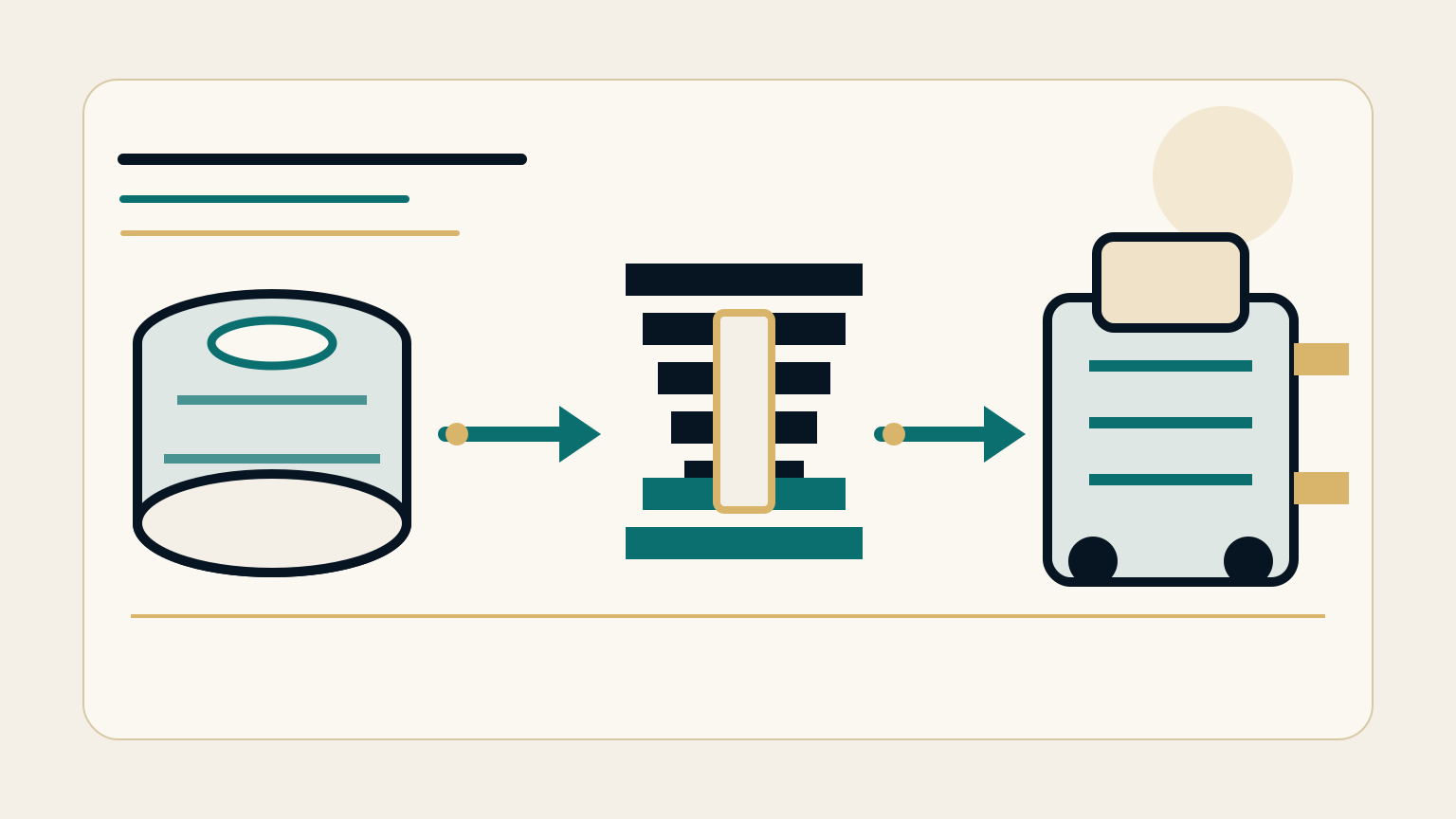
The European Union’s provisional safeguard measures on grain-oriented electrical steel took effect on 25 September 2026. For procurement teams, the most important point is the scope: the measure includes not only GOES coil, but also laminations and transformer cores made from it, including certain cores already incorporated into transformers.
This means the compliance question has moved downstream. Importers, transformer manufacturers, grid contractors and project buyers now need to check whether their finished or semi-finished equipment falls within the measure, how the tariff-rate quota applies and whether a price threshold changes the landed cost.
What the European Commission confirmed
The European Commission announced the provisional measures on 18 September after an investigation launched in March. The Commission said high import pressure, global overcapacity and the closure of traditional export markets created an urgent threat to the EU industry.
The measures combine tariff-rate quotas with price thresholds. The official announcement also describes the wider scope as a novel feature: laminations, cores and cores already incorporated into transformers are included so that protection is not limited to the upstream steel producer.
The safeguard remains provisional while the investigation continues. A definitive measure would require support from a qualified majority of EU member states. Buyers should therefore treat the current rules as operative, but not assume that their final form or duration is settled.
The price signal is important, but classification comes first
Reuters reported that minimum prices for GOES within the quotas range from €2,800 to €3,400 per metric ton, with €3,500 per ton for volumes above the quotas. Those figures provide a useful commercial reference, but they do not by themselves determine the payable amount for every import.
The actual exposure depends on the product, customs classification, origin, quota position, customs value and the detailed terms of the implementing measure. A transformer quotation may also contain steel, conversion, engineering, freight and installation costs that cannot be evaluated from a steel price threshold alone.
Procurement teams should avoid applying a headline price floor mechanically to a finished transformer. The correct first step is to establish what is being imported and which customs treatment applies.
Why downstream coverage changes sourcing decisions
GOES is a specialised steel used in efficient transformer cores. It is processed into thin laminations so that magnetic losses can be controlled when electricity is transmitted. The material therefore sits inside equipment needed for grids, renewable-energy connections and industrial power systems.
If protection covered only bare coil, importers could have an incentive to move more processing outside the EU and import a downstream component instead. Extending the measure to laminations and cores is intended to reduce that route around the safeguard.
For buyers, however, the wider scope adds work. A sourcing team may now need information from the steel mill, core manufacturer and transformer assembler—not only from the final equipment supplier. Bills of materials, origin evidence and product descriptions become more important because the relevant steel may be embedded several stages below the purchased item.
Contracts and tenders need a second look
Existing tenders may have been priced before the safeguard took effect. Buyers should identify whether duty, quota exhaustion or a price-threshold adjustment can be passed through under the contract. A general “change in law” clause may not answer every question, especially where the supplier selected the origin or agreed to a fixed delivered price.
Before approving a revised quotation, request a transparent cost bridge showing:
- the affected product and customs code;
- declared origin and manufacturer;
- quantity of GOES or covered component;
- quota assumptions and import timing;
- the calculation of any additional duty or price adjustment;
- freight, conversion and other costs kept separate from the safeguard impact.
Project teams should also check whether changing the steel source affects technical qualification, core-loss performance, warranty coverage or delivery lead time. A cheaper alternative is not workable if it triggers redesign or customer reapproval.
A buyer checklist for the new measure
- Map the product. Determine whether the purchase is GOES coil, laminations, a transformer core or equipment containing a covered core.
- Confirm the customs code. Obtain a written classification basis instead of relying on a general product description.
- Verify origin. Trace the material through the core and transformer supply chain where necessary.
- Check quota status. Confirm the relevant quota period, available balance and who carries the risk of exhaustion.
- Model landed cost. Separate steel value, conversion, freight, duty and any price-threshold effect.
- Review contract allocation. Identify whether the seller or buyer bears new trade-measure costs and documentation obligations.
- Protect the schedule. Keep an approved alternative source and allow time for classification or customs questions.
What buyers should not conclude
The measure does not prove that every Asian-origin transformer will become unavailable or uneconomic. Reuters reported that China represented more than half of EU imports of the steel and downstream products in 2025, but the commercial impact will vary by origin, grade, quota and product configuration.
Nor does the safeguard guarantee shorter transformer lead times. Protecting EU production capacity may support long-term resilience, while near-term projects can still face manufacturing queues, qualification limits and grid-equipment bottlenecks.
One Discovery’s earlier guide to EU scrap-export rules explains the same procurement principle from the opposite direction: a change in trade policy must be translated into product-level documentation and contract action. Our CBAM supplier-data checklist shows why evidence from upstream suppliers matters when obligations reach through a value chain.
The procurement conclusion
The EU’s new electrical-steel safeguard is not only a steel-market issue. Because the scope extends to laminations and transformer cores, it can affect equipment importers and infrastructure projects farther downstream.
Buyers should verify classification, origin, quota access and contractual cost allocation before accepting a revised price or delivery promise. The rule is provisional, but the procurement response needs to begin now.
ONE DISCOVERY VIEW
When trade protection moves downstream, supplier evidence must move upstream. Buyers need visibility into the steel, core and transformer—not only the final invoice.
Sources
- European Commission — provisional safeguard measures on GOES, 18 September 2026
- European Commission — initiation of the GOES safeguard investigation, 27 March 2026
- Reuters — quotas, price thresholds and downstream scope, 18 September 2026
- thyssenkrupp Electrical Steel — GOES applications and transformer-core performance
Translate the safeguard into product-level evidence before approving the next order.
Contact One Discovery